GUINEA PIGS & CHILDREN
📖 Thinking About Getting a Getting a Guinea Pig for Your Child? READ THIS FIRST
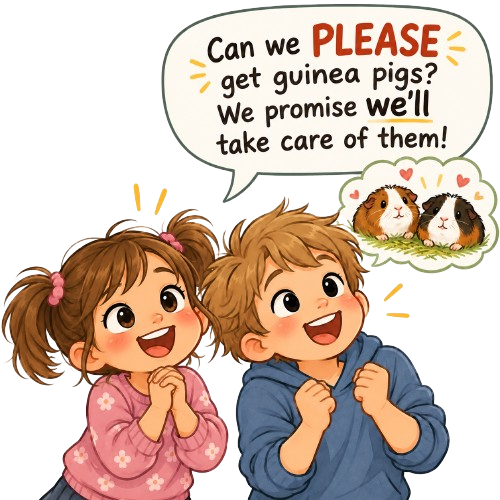
Guinea pigs can make wonderful family pets, and caring for them can be an incredibly rewarding experience for children. But before bringing guinea pigs home, there is one very important question every parent should ask:
On a scale of 1 to 10 how much do YOU Want a Guinea Pig?
There is a common misconception that guinea pigs are a good “starter” pet for young children. When in reality, they are a high-maintenance exotic pets and are not suitable for most families with children unless all adults in the home genuinely want them too.
While children may enjoy helping with small tasks like handing out veggies, refilling hay, or supervised play time; most of the actual of work will fall on the parents. They’ll need to to spot clean the enclosure twice a day, do a couple of extra loads of laundry each week, meal-prep a varied diet of fresh greens and vegetables for a 2-pound potato that screams every time the fridge opens, provide unlimited hay (2 guinea pigs will eat roughly 8-12lb of hay per month), weight them at-least once a month, and pay attention to small changes in behavior, appetite, or 💩. [We’re not joking: The Complete Guide to Guinea Pig Poop]
That’s a much bigger commitment than most people realize!
Even when children help, the mental load still falls on the parents who need to supervise and make sure everything is being done correctly. Someone has to make sure the enclosure was actually cleaned; notice if the hay or litter is running low; remember to buy vegetables; make sure water bottles aren’t blocked or leaking; weigh the guinea pigs and notice that one lost 100 grams; recognize if one or both are suddenly eating more slowly or producing smaller poops; miss work to take them to the vet, pay $$$$ in vet bills, and possibly administer medications.
That someone needs to be an adult.

If YOUR CHILD lost interest in the guinea pigs tomorrow:
❌ No feeding them
❌ No cleaning their area
❌ No begging to hold them
❌ No excitement whatsoever
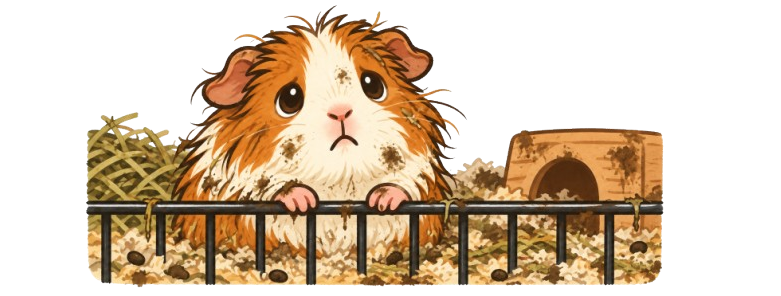
Would YOU still be happy to dedicate 2-3hrs every day to:
✓ Feed and clean up after them every day?
✓ Meal-prep vegetables?
✓ Wash bedding and clean the enclosure?
✓ Monitor their weight and health?
✓ Pay $$$$ for exotic veterinary care?
✓ Give medications if needed?
✓ Arrange for pet sitting / boarding when you travel?
✓ Keep them even if your child’s future housing doesn’t allow pets?
✓ Continue caring for them for the next 7–9 years?
If the answer is an enthusiastic YES, guinea pigs may be a wonderful addition to your family ✅
If your child is a 10/10 • you are a 3/10 • your partner is a 0/10
💡 fostering may be a better idea!
Getting Your Child a Guinea Pig to “Teach Them Responsibility” Is Setting Them Up for Failure
Sadly, the only lesson this end up teaching is “animals are replaceable” when guinea pigs are inevitably neglected or re-home.
Responsibility should be taught with chores that can be forgotten or done imperfectly without a living animal suffering. A guinea pig cannot wait until tomorrow because a child forgot to refill the water bottle or hay, or doesn’t feel like cleaning the enclosure or taking them out for exercise. Children cannot be expected to notice when guinea pigs loose weight, take longer to eat, aren’t pooping, or are behaving oddly.
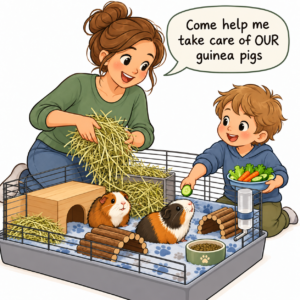
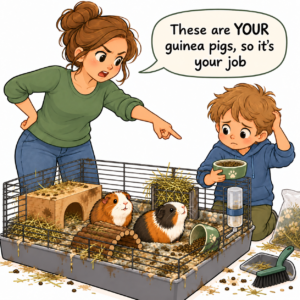
Children learn responsibility by watching parents model proper and consistent pet care.
What Can Children Realistically Do?
Toddlers:
Ages 0–4
Guinea pigs are extremely fragile and can be seriously injured if dropped, squeezed, stepped on, or handled incorrectly. Broken legs and back are common especially with baby guinea pigs.
Toddlers should have direct, hands-on adult supervision at all times. Children should be seated at all times when handling the guinea pig, only an adult should pick-up or carry the guinea pig.

Children:
Ages 5–12
At this age, children can begin helping with simple tasks like feeding vegetables, refilling hay and water, socializing, writing down weekly weights, and light spot-cleaning. Parents should still actively supervise and verify that these tasks were completed correctly. “I told them to do it” cannot mean the guinea pigs go without hay, water, food, or a clean enclosure.
An adult should also remain present during out-of-enclosure interaction to make sure handling stays safe and appropriate. Accidental drops are still common at this age, especially if a child tries to carry a guinea pig while standing or becomes startled if the guinea pig suddenly squirms, nips, or scratches.
Teens:
Ages 13–17
Responsible older teens may be able to handle all of the daily care including feeding, cleaning, weighing, and socializing independently. Parents are still responsible for overseeing the care and taking the guinea pigs to the vet. But as kids get older they tend to spend LESS time at home as they become busier with friends, school, sports, jobs, finals, college applications, and eventually plans to move out.
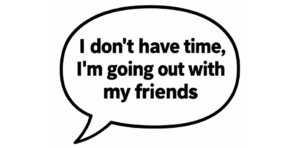
What Will Happen When Your Child Moves Out?
Let’s think long-term for a second. It is common for guinea pigs to live to be 5-7 years old, and with with improved care standards and veterinary some live 8–10 years or longer! That means a guinea pig adopted for a teen will still be around when they graduate high school and head off to college.
And while it sounds nice to imagine that the guinea pig will just go with them .. let’s take off the rose-colored glasses. Most dorms, airlines and rentals do not allow guinea pigs, making moving a lot more complicated than families realize.