Penny & Wild Smalls of South Florida is a 501(c)(3) nonprofit rabbit and guinea pig rescue and sanctuary.
📍 Miami-Dade, Broward & Palm Beach (est. 2021)
We are currently caring for 50 rabbits and 40 guinea pigs, many of whom are seniors or lifelong sanctuary residents with ongoing medical needs. Our priority is providing every animal with the highest quality of care during their time with us.

We are a 100% foster home based rescue and do not have a shelter facility. Our ability to help with strays, colonies, and larger groups is limited and often depends on Good Samaritans who are willing to temporarily foster the animal(s) until one of our foster home becomes available.
We are happy to assist with corralling and lend enclosures, food, and supplies to fosters.
We offer free weekly Bunny 101 and Guinea Pig 101 classes via Zoom, covering proper housing, diet, veterinary care, behavior, and more. Anyone that is considering fostering, adopting, finds a stray, or simply want to learn more about rabbits or guinea pigs is welcome to join!
Available for Adoption
ADOPTION FEE: $100
All rabbits and guinea pigs receive an intake wellness exam and are spayed or neutered (unless medically exempt) before being responsibly adopted into loving, indoor-only forever homes.
TO APPLY:
- Must be 21 years of age or older and provide a driver license or state ID.
- Everyone in the household (spouses, parents, roommates, etc.) must agree to and participate in the adoption steps.
- Renters must provide written approval from their landlord and/or building to have rabbits.
1. INDOORS ONLY: Domestic rabbits and guinea pigs should be housed and kept indoors at all times. Taking prey animals outdoors is not only stressful for them but exposes them to many dangers, such as: predators, parasites (fleas, ticks, mites, lice, fly strike, bot flies, etc.), heatstroke, ingesting pesticides or a toxic plant, escaping, and RHDV II for rabbits.
- NO: patios, porches, backyards, or walks/outdoor playtime.
2. CENTRAL: The enclosure should be in an adults bedroom, office, dedicated rabbit /guinea pig room, or a central, high-traffic area like the living room.
- NO: children’s bedrooms unless 13 or older, laundry room, kitchen, bathroom, garages, patios, etc.
3. FREE ROAM TIME: rabbits and guinea pigs cannot stay in the enclosure all of the time and will need 3-4 hours of daily supervised free-roam time to explore and exercise in an indoor “rabbit/guinea-pig proofed” room.
4. PREDATORY PETS: there should always be at-least 2 barriers (such as a closed door and sturdy enclosure) between prey and predatory pets when not being directly supervised.
MINIMUM LIVING SPACE for 🐰
4ft x 4ft, 16sq ft 1 dwarf sized rabbit (2-4lb)
4ft x 6ft, 24sq ft 1 medium sized rabbit (5-9lb) or a pair of dwarfs
6ft x 6ft, 36sq ft 1 large breed rabbit (10-14lb) or a pair of medium sized rabbits
FREE ROAM giant breed rabbits (15lb+)
A single dwarf rabbit needs a minimum 4ft x 4ft, 16sq ft horizontal living space when enclosed, preferably 4ft x 6ft (24sq ft).
This will be their “home-base” for when you cannot supervise them. For each additional rabbit (or 4lb of body weight), add 8-12sq ft to their living space to maintain a healthy and harmonious environment and prevent fighting and bulling due to resource guarding amongst multiple rabbits. Giant breeds will need an entire room to free roam all of the time.
MINIMUM LIVING SPACE for 🐹
2ft x 4ft, 8sq ft female/female pair
3ft x 4ft, 12sq ft male/male or a male/female pair
4ft x 4ft, 16sq ft trio
A female/female pair will need a minimum 2ft x 4ft (8sq ft) living space when enclosed. A male/female or male/male pair will need a minimum 3ft x 4ft (12sq ft) living space when enclosed. For each additional guinea pig add 4sq ft to their living space to maintain a healthy and harmonious environment and prevent fighting and bullying due to resource guarding.
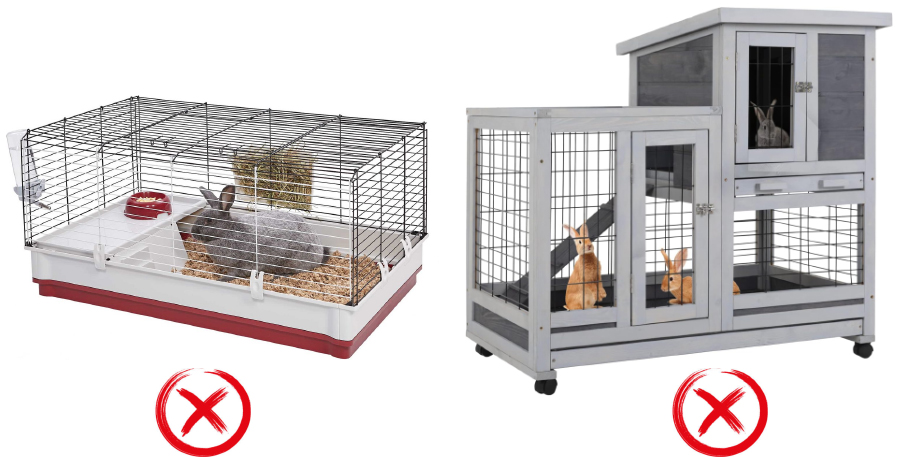
Cages and hutches DO NOT provide enough room for exercise and overall well-being. Not providing enough space can lead to a host of problems due to depression and frustration. These often lead to pacing back and forth, cage chewing (which can damage their teeth), and cage aggression (growling, lunging and biting at hands that reach into their space or during cleaning). Health issues such as obesity, heart disease, muscle atrophy, skeletal changes, and infections such as bumble foot in guinea pigs are more common. Cages and hutches are also notoriously difficult to keep clean as rabbits and guinea pigs end up using the entire space as a litter box and the wood absorbs the smell of urine.